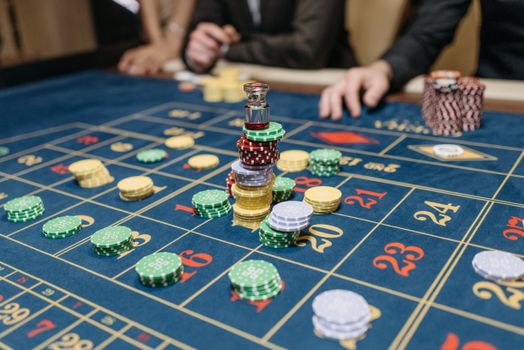
Every casino floor has its legends: high rollers who wager extraordinary sums and chase the biggest wins. These VIP players, sometimes called “whales,” fuel the excitement of both land-based and online casinos, and their stories are the stuff of gambling folklore. But behind the glamour and the thrill, even the most seasoned high rollers are vulnerable to costly mistakes—errors that can turn a winning streak into a nightmare. Whether you’re an aspiring high roller or simply fascinated by the psychology of big-stakes gambling, understanding these pitfalls is essential for anyone aiming to play smart at the highest level.
Let’s dive into the world of high-roller mistakes, explore the reasons behind them, and, most importantly, learn how to avoid the traps that so often ensnare even the boldest players.
The Psychology Behind High Roller Mistakes
High rollers are not defined only by their bankrolls—they are also characterized by their attitude toward risk, confidence in their strategies, and desire for exclusivity. However, these same traits can make them vulnerable to psychological traps.
.png)
One of the most common pitfalls is the illusion of control. High rollers often believe their experience or intuition gives them an edge over games of pure chance, such as roulette or slots. According to a 2022 study by the National Council on Problem Gambling, over 68% of high-stakes gamblers admitted to increasing their bets after a significant win, believing they were on a “hot streak.” This is a classic example of the gambler’s fallacy—the mistaken belief that past results influence future outcomes in games of chance.
Another psychological trap is loss chasing. The urge to recover losses by increasing bet size is not unique to high rollers, but the stakes are exponentially higher. In a survey conducted by the UK Gambling Commission in 2023, 41% of high-stakes players reported doubling their bets following a loss—a strategy that often leads to devastating bankroll depletion.
Understanding these mental pitfalls is the first step toward avoiding them. Awareness of cognitive biases, such as overconfidence and the illusion of control, allows high rollers to approach their play with a more level-headed mindset.
Poor Bankroll Management: The Silent Bank-Breaker
No matter how large a player’s bankroll, poor management can quickly erode even a fortune. One of the most common mistakes among high rollers is failing to set clear limits—both for individual sessions and overall gambling activity.
Bankroll management is about more than just setting a top-line budget. It involves dividing funds into appropriate session stakes, knowing when to walk away, and resisting the temptation to “reload” after losing sessions. According to the American Gaming Association, high rollers who set strict loss limits are 53% less likely to experience severe gambling downturns than those who play without boundaries.
Let’s compare common bankroll management approaches among high rollers:
| Approach | Description | Risk Level | Estimated Survival Rate (1 Year) |
|---|---|---|---|
| No Limit | Wagering freely without pre-set limits | High | 28% |
| Session-Based Limit | Setting a maximum loss per session | Moderate | 62% |
| Percentage-Based Limit | Betting only a fixed % of total bankroll per session | Low | 79% |
| Stop-Loss + Win Goal | Setting both loss and win thresholds | Lowest | 86% |
As the table shows, high rollers who combine stop-loss and win-goal strategies enjoy the highest long-term survival rates, underlining the importance of disciplined bankroll management.
Misunderstanding House Edge and Game Selection
Even among players betting thousands per hand, there is often a surprising lack of understanding about house edge. The house edge is the mathematical advantage the casino holds over the player, expressed as a percentage of each bet. In high-stakes gaming, small differences in house edge translate to enormous sums over time.
For example, consider a high roller wagering $5,000 per hand at blackjack versus $5,000 per spin at a roulette wheel. Standard blackjack played with basic strategy has a house edge of about 0.5%, whereas American roulette is 5.26%. Over 100 bets, the expected loss at blackjack would be $2,500, while at roulette, it would soar to $26,300.
Many high rollers are drawn to games with higher volatility or larger jackpots, often overlooking these mathematical realities. In 2021, data from the Las Vegas Gaming Commission showed that 54% of VIP losses came from high-edge games such as roulette, Caribbean Stud Poker, and certain high-volatility slots.
To avoid this pitfall, high rollers should:
- Learn the house edge for each game they play. - Prefer games with a low house edge, especially for large bets. - Use optimal strategy where skill is involved, such as blackjack or video poker.Neglecting Loyalty Programs and Casino Comps
High rollers are typically courted with lavish perks—free suites, private jet transfers, exclusive event invitations, and more. However, not all high rollers take full advantage of loyalty programs and comps, which can be a costly oversight.
According to Casino Journal, a typical VIP player can earn comps worth 1-2% of their theoretical loss. For a player who wagers $1 million a year, that’s $10,000–$20,000 in value. Yet, surveys indicate that nearly one in four high rollers either forget to use their player’s card or fail to negotiate enhanced rewards.
Some common mistakes include:
- Not enrolling in the casino’s loyalty program before playing. - Neglecting to track play with a player card. - Failing to discuss personalized offers with a casino host.To maximize rewards, high rollers should always register for VIP programs, use their player cards consistently, and build relationships with casino hosts, who can often authorize special perks and rebates based on play.
Overlooking Responsible Gambling Tools
The thrill of high-stakes gambling can sometimes lead even disciplined players into dangerous territory. Modern casinos, both brick-and-mortar and online, offer a range of responsible gambling tools designed to help players stay in control. Yet, many high rollers either ignore these tools or perceive them as unnecessary.
Features such as deposit limits, session timers, and self-exclusion options are proven to reduce the risk of gambling harm. In a 2023 study by the International Center for Responsible Gaming, players who used at least one responsible gambling tool were 38% less likely to report problem gambling symptoms.
Practical steps for high rollers include:
- Setting daily, weekly, and monthly deposit or loss limits. - Using session reminders to avoid marathon gambling sessions. - Taking advantage of cooling-off periods after large wins or losses.By integrating these tools into their routine, high rollers can safeguard both their finances and their enjoyment of the gaming experience.
Failing to Seek Professional Advice
Navigating the complexities of high-stakes gambling can be overwhelming—especially when tax implications, legal restrictions, and cross-border play come into play. Despite this, many high rollers rely solely on informal advice or personal experience.
Consulting with professionals, such as tax advisors, legal experts, and even gambling counselors, is crucial for anyone wagering at high levels. For example, in the United States, gambling winnings over $5,000 are subject to federal tax withholding, which has caught many high rollers off guard. In the UK, winnings are tax-free, but cross-border players may face complex reporting requirements.
Professional guidance can also help with:
- Understanding the fine print of VIP program terms and conditions. - Managing large wins and losses for tax efficiency. - Setting up trusts or legal entities to manage gaming funds.Taking professional advice turns high-stakes gaming from a risky endeavor into a more strategic, well-managed pursuit.
Smart Play: Final Thoughts on High Roller Mistakes
The world of high rollers is glamorous, exhilarating, and fraught with both potential and peril. While the size of the bets may change, the core mistakes—emotional decision-making, poor bankroll management, and lack of preparation—are timeless. By understanding the common pitfalls and adopting a disciplined, informed approach, high rollers can maximize their enjoyment and minimize their risks.
Remember: the smartest high rollers aren’t just lucky—they’re methodical, educated, and unafraid to use every tool at their disposal. Whether you’re a seasoned VIP or just stepping into higher-stakes play, learning from these mistakes is the surest way to keep the odds in your favor.